

📅 2012CRISIS
A Year That Changed Habbo
New games, a new look, and a community in crisis.
1 / 3
2012 · TURBULENCE
2012 began with Habbo trying to reinvent itself. After the major technical changes of the previous years, Sulake was putting more emphasis on quests, games, social features and a redesigned website. In early 2012, the Game Center returned with new official games including Fast Food, Habbo Speedway, Habbo Pix and KickWars Galactica. After disappearing when the Flash Beta arrived in 2009, official games were finally returning to the hotel in a new form.
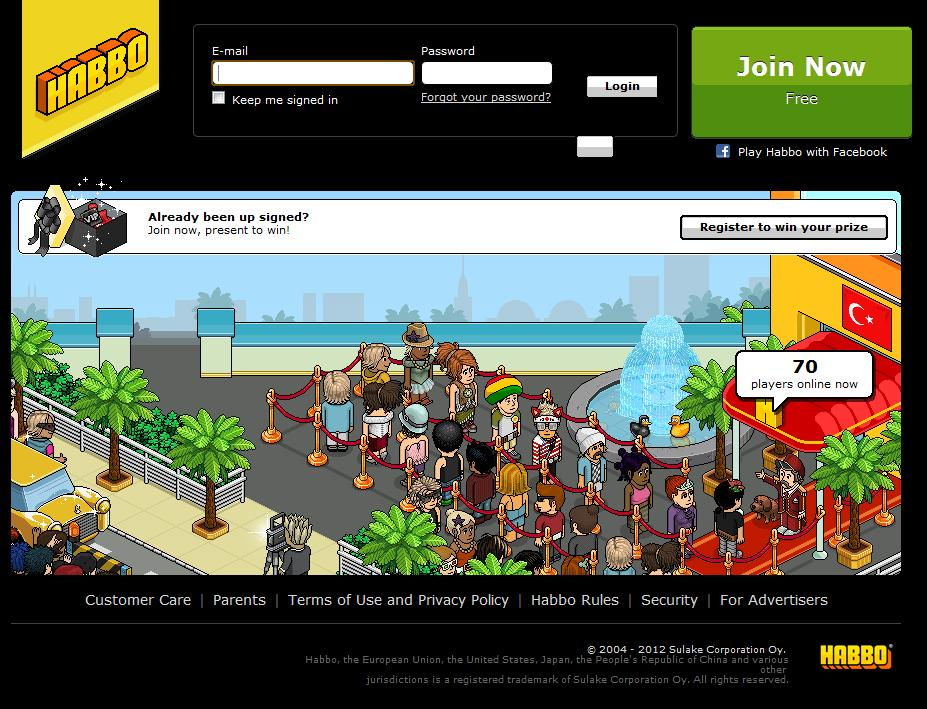
The website itself also received one of its biggest redesigns in years. In March 2012, Habbo moved many features that had previously lived on the website into the client, while introducing a new hotel view focused heavily on quests. News articles were replaced by a more social-media-driven approach, including Twitter feeds, and several familiar homepage features were removed or relocated. The changes were controversial, with many veteran players feeling that Habbo was becoming less convenient and less recognisable.
The year also brought plenty of new furniture and campaigns. Footsteps of the Ancients, Habbo-Lympix, Jetset, Haunted Carnival and Christmas Castles were among the major themes of the year. The Haunted Carnival campaign was particularly memorable, introducing a new Pumpkins currency alongside carnival-themed furniture and new roller pieces.
But everything changed in June.
On 13 June 2012, Habbo experienced what became known as The Great Mute. Following a Channel 4 investigation concerning allegations about inappropriate behaviour on the service, Sulake temporarily muted communication across Habbo worldwide. Players could no longer communicate through normal chat, minimail or the console.
The mute was an extraordinary moment in Habbo history. A game built around talking to other people suddenly became almost completely silent. For veteran players, the contrast was surreal: millions of avatars could still walk around their rooms, use furniture and participate in the hotel, but the fundamental social feature that had defined Habbo since 2000 had effectively disappeared.
Sulake subsequently announced major changes to moderation and safety practices, while the company faced intense scrutiny from the media and the Habbo community.
Yet Habbo itself continued moving forward. The Habbo Council was created in April, selecting players to provide feedback on the hotel's banning system, and the year also saw the launch of HabboxWiki, an enormous community-maintained archive dedicated to documenting Habbo and its history.
For Habbopix, that last part is particularly interesting. By 2012, Habbo's history was becoming something that players themselves were actively documenting and preserving — through fansites, wikis, screenshots, furniture databases and community archives.
And that is ultimately what makes 2012 such a fascinating year.
Habbo was trying to become newer, safer and more modern, while simultaneously dealing with one of the most serious crises in its history. The hotel survived, but the community that emerged afterward was noticeably different.
2012 marked the end of one chapter of Habbo history — and the beginning of another.
📖
Era
2012