

📅 2005MILESTONE
The Hotel Comes Alive
Games, community and a growing global business.
1 / 4
2005 · THE COMMUNITY ERA
After Habbo's huge international expansion in 2004, 2005 became a year of consolidation and growth. Habbo was no longer simply a collection of newly launched hotels — millions of users were now spending time inside them, creating rooms, collecting furniture, meeting friends and building their own communities.
One of the biggest developments came outside the hotel itself. In January 2005, Benchmark Capital, 3i and Elisa invested €18 million into Sulake, giving the company significant new capital to continue expanding Habbo and developing new products. Sulake's own historical timeline records the investment as one of the major milestones of the year.
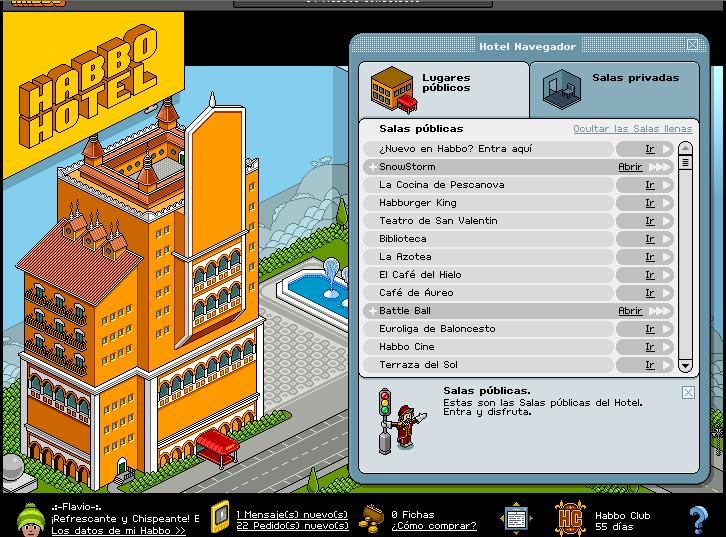
Inside Habbo, the emphasis increasingly shifted toward things players could actually do together. Furniture remained at the centre of room building and trading, but games and competitions were becoming an increasingly important part of the experience. In October 2005, the first version of Battle Ball was introduced, giving players a competitive multiplayer activity where the room itself became part of the game.
The community around Habbo was also becoming its own ecosystem. Players were creating roleplay groups, events, competitions and themed rooms, while fansites were beginning to document the constantly changing world. Contemporary research into Habbo's development specifically notes that fansites had become an important part of community management, with community managers maintaining relationships with major fansites.
This was also the period when the classic 2000s Habbo experience was really taking shape. Furniture wasn't simply decoration anymore. Rollers, teleporters, wired-like mechanisms and other functional pieces gave players increasingly creative ways to build games and interactive rooms. Even ordinary furniture could become part of a maze, roleplay environment, casino, hospital, police station or one of the countless player-created room concepts that became characteristic of old Habbo culture. Contemporary descriptions of Habbo's community mention players creating everything from hospitals and police departments to themed parties and reality-show-inspired events.
And for collectors, 2005 was firmly part of what many players now call Old Habbo — an era generally associated with the simpler 2000–2007 version of the Hotel. The classic interface, small rooms, pixel-heavy furniture and relatively limited building tools created a very different atmosphere from later Habbo.
There were even some memorable furniture mishaps. In January 2005, a catalogue glitch on the German hotel accidentally made Christmas furniture and rares available outside their intended period — the kind of strange catalogue incident that would eventually become part of Habbo collector folklore.
By the end of 2005, Habbo had evolved into something much bigger than the virtual hotel that had launched just five years earlier. The hotels were global, the furniture economy was established, fansites were becoming part of the community, and players were turning the rooms into their own games and worlds.
The foundations were now in place for what many veteran players would later remember as Habbo's golden era.
📖
Era
2005