

📅 2017CREATIVE
A World Built by Players
Habbo's rooms become the stage for everything.
1 / 2
2017 · CREATIVE COMMUNITY
By 2017, Habbo had transformed far beyond the simple virtual hotel that existed in the early 2000s. The furniture catalogue had become enormous, Builders Club had given dedicated creators access to thousands of pieces, and Wired allowed players to turn rooms into functioning games. Habbo was increasingly becoming a platform for experiences created by its own community.
The year's campaigns show just how varied the Hotel had become. Habbo moved through completely different worlds throughout 2017 — from Wedding and Farm themes early in the year to Outer Space, Santorini, Seaside Town, Summer Bazaar, Elegant, Cursed Caves, American Prairie and Victorian Christmas later on. Each campaign brought new furniture, room bundles, badges and events.
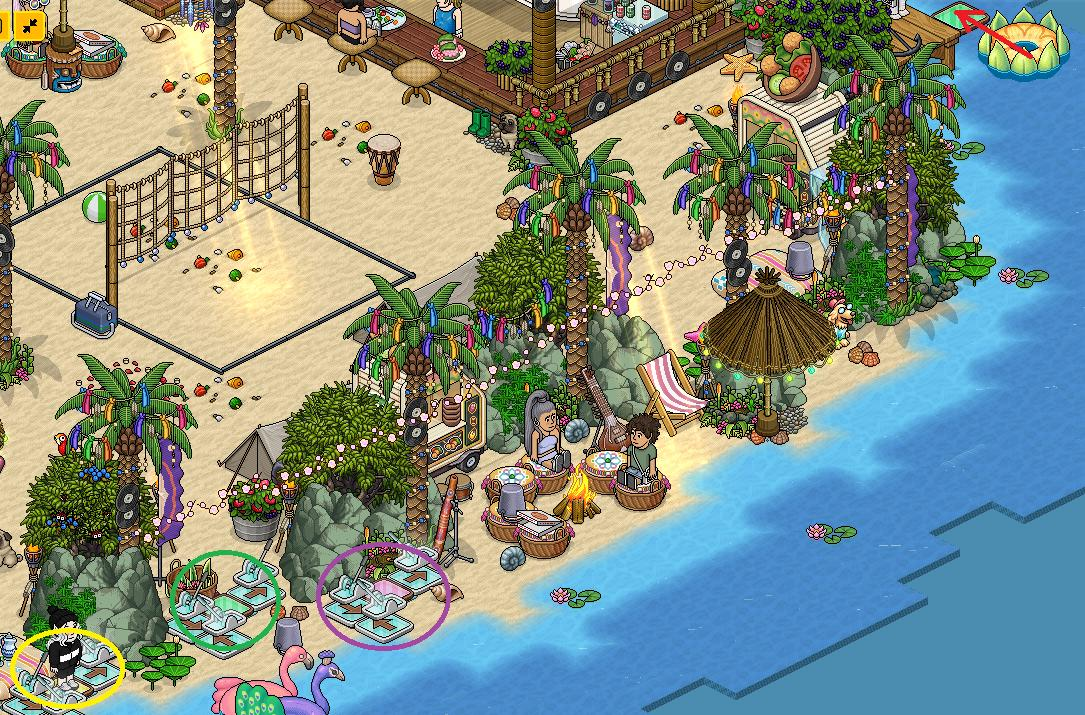
One particularly nice example was the 2017 Summer Lido competition. Rather than simply releasing another official public room, Habbo asked its players to design the new Summer Lido themselves. The winning room was created by a player named VinnyLovesYou, while five runners-up also received recognition and rewards. The winning design was then placed into the Public Rooms section for the summer.
This kind of competition demonstrated how far the relationship between Habbo and its builders had evolved. Years earlier, players had simply decorated rooms for themselves. By 2017, their creations could become official spaces that thousands of other players visited.
The Builders At Work programme continued to play an important role too. After fourteen seasons, the original team-based BaW system had been replaced at the end of 2016 by Builders At Work 2.0, centred around a single Master Builder and their assistants. The programme gave selected players access to expanded Builders Club limits and special building tools so they could create official rooms, games and global campaigns.
The result was a strange but fascinating relationship between Sulake's designers and Habbo's players. Sulake provided the furniture, systems and themes — but some of the most memorable spaces were assembled by people who were originally just ordinary members of the community.
And furniture itself had become incredibly diverse. A 2017 player could build a farm, wedding venue, space station, Mediterranean town, prehistoric cave or Victorian Christmas village using pieces from completely different furniture generations. The catalogue had effectively become a huge visual library that builders could mix and match.
This was also the era when Habbo's older furniture was gaining another kind of value: nostalgia. Veteran players were now surrounded by years of accumulated furniture, while newer players were discovering classic pieces that had first appeared more than a decade earlier.
By 2017, Habbo wasn't really just a hotel anymore.
It was a toolbox.
A collection of rooms, furniture, games, stories and communities where players could decide what they wanted to create.
And for a project like Habbopix, that's an important part of Habbo's history to preserve — because sometimes the most interesting part of a piece of furniture isn't what Sulake designed it for.
It's what players ended up doing with it.
📖
Era
2017